
Many U.S.-based crypto traders treat exchange verification (KYC) as an annoying checkbox: slow, privacy-invasive, and only necessary to withdraw fiat. That’s a partial view—and a misleading one for anyone trading futures, using margin, or moving between Web3 and the centralized exchange world. OKX’s verification process is the mechanism that unlocks a chain of capabilities (and constraints): access to higher leverage products, fiat rails, custody protections, and regulatory compliance. Understanding how verification is implemented, where it helps, and where it doesn’t is essential for making tradeable decisions—especially in the U.S. market where rules and user protections matter.
In what follows I’ll correct common misconceptions, show the trade-offs you face as a U.S. trader, and give practical heuristics for choosing verification levels based on what you want to do: spot, margin, futures, or Web3 interactions. I’ll also note where the system breaks—phishing, identity fraud, or misplaced trust—and what to watch next as OKX adapts to delistings and regulatory scrutiny.
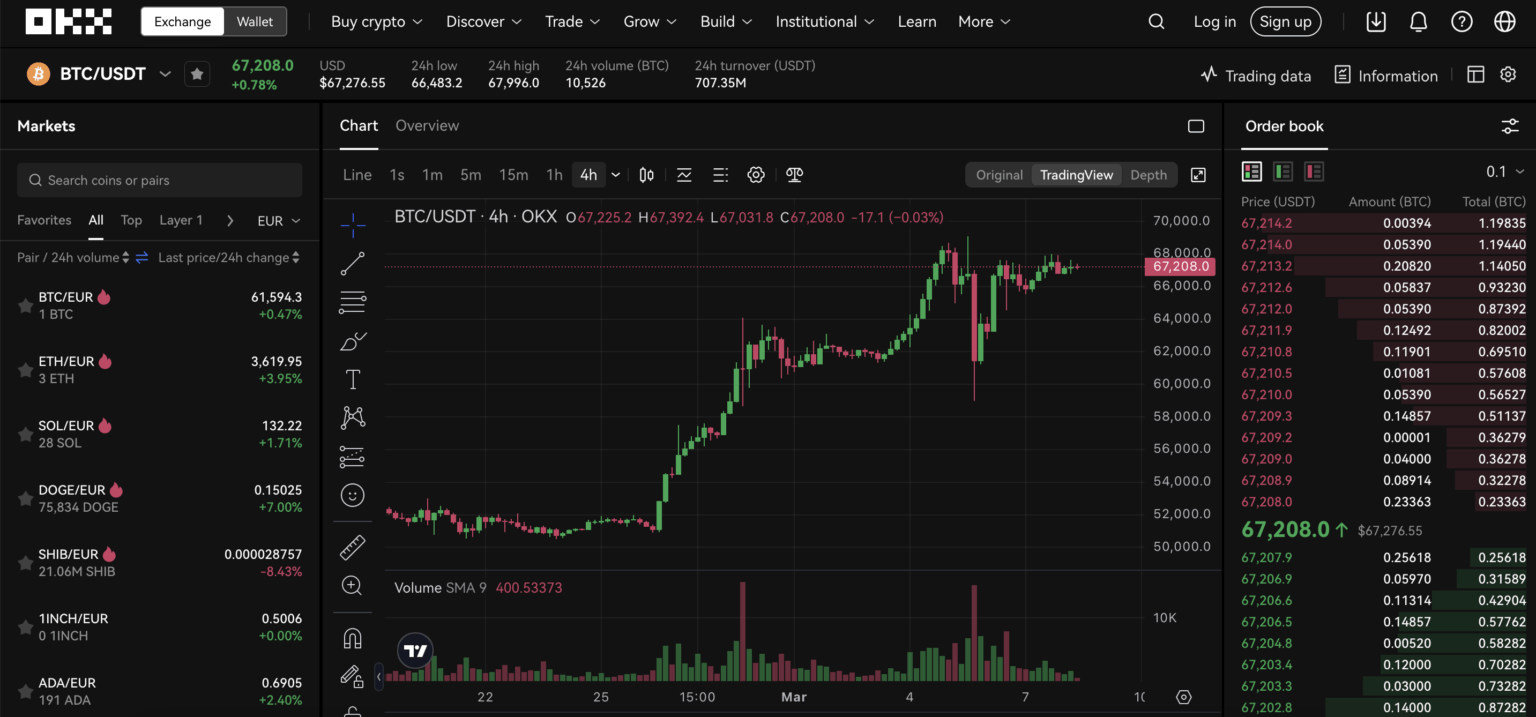
How OKX verification works — mechanism, levels, and immediate effects
At a mechanism level, OKX’s identity verification (KYC) ties a digital account to a real-world identity using three core signals: (1) government-issued ID upload, (2) biometric liveness / facial-recognition check, and (3) cross-checks against sanctions and AML databases. For U.S. users these checks are not optional for many functions: they are required to fund accounts via fiat, increase withdrawal limits, and trade some derivatives. The verification also feeds into behavioral security: AI-driven login monitoring and mandatory two-factor authentication (2FA) become more meaningful when they protect verified identities rather than anonymized accounts.
Why does this matter for traders? Because verification changes risk surfaces. When you trade spot or hold small balances, the main threats are phishing and platform hacks; for futures and margin, counterparty exposure, credit risk, and regulatory constraints matter more. OKX stores over 95% of user assets in cold, multi-sig wallets—so custodial security is strong in the abstraction. But custody doesn’t eliminate the need to know who you are trading with, especially where margin and derivatives can create cascading liquidations. KYC is the junction point where legal accountability, withdrawal controls, and higher-leverage products intersect.
Myth-busting: five common misconceptions about OKX verification
Misconception 1 — “KYC only impacts fiat withdrawals.” False. While fiat rails are a primary driver, KYC on OKX also gates futures, options, and higher-leverage margin. In practice, if you want to use up to 125x on certain perpetuals or options, your account must meet identity and sometimes residency checks.
Misconception 2 — “Verification makes my funds safe by itself.” Partial. Verification is a control that enables regulatory and remedial actions (e.g., freeze on illicit funds), but it does not prevent phishing, credential reuse, or loss of non-custodial seed phrases. OKX’s cold storage and PoR transparency are separate protections; KYC complements these by allowing compliance workflows when abuse is detected.
Misconception 3 — “Biometric KYC is a privacy landmine.” It is sensitive data, yes, but the engineering trade-off is clear: facial liveness checks reduce deepfake and synthetic identity fraud that would otherwise let bad actors open leveraged positions anonymously. The right question is how the exchange stores, processes, and limits reuse of biometric templates; safe practice includes using platforms that minimize data retention and provide clear deletion options.
Misconception 4 — “Non-custodial wallets make KYC irrelevant.” Not true. OKX’s self-custodial Web3 wallet keeps keys with the user, but the centralized exchange still requires KYC for CEX-based activities and fiat on/off-ramps. If you move assets from a non-custodial wallet to an exchange for margin or futures, the exchange’s identity policies apply at the destination.
Misconception 5 — “Proof of Reserves (PoR) removes all counterparty risk.” PoR shows backing at a point in time and helps transparency; it doesn’t change market risk, execution risk, or the operational risk that a delisting (like the recent removal of certain low-liquidity spot pairs) can limit trading options or force position changes if liquidity evaporates.
Practical trade-offs for U.S. traders: when to verify and what to expect
Decision framework: map your primary activity to verification needs. Three practical buckets help:
– Casual spot/hold: If you buy major coins and rarely move them, a basic verified account that permits moderate withdrawals and fiat access is often sufficient. Keep 2FA enabled and consider separating long-term holdings into a non-custodial wallet for added control.
– Active trader (spot + margin up to 10x): Complete KYC. Margin and isolated-cross modes require identity checks to manage credit and compliance risks. The payoff is access to better liquidity, margin features, and faster fiat operations, but you accept that the exchange can freeze or flag accounts under AML suspicions.
– Advanced derivatives trader (futures, options, high leverage): Expect higher verification thresholds. Perpetual swaps with extreme leverage are intentionally gated because they can generate outsized systemic risk; verification gives the exchange legal clarity to offer these products but also subjects you to stronger surveillance and potential restrictions if market stress triggers compliance actions.
Heuristic: verify to the level your strategy requires, but avoid blanket overreach. For many U.S. traders aiming to use OKX futures, completing full KYC upfront will be more efficient than upgrading mid-cycle when markets move quickly and you need to open or close positions under time pressure.
Where verification helps, and where it breaks
Helps: KYC enables fiat rails, higher leverage products, account recovery pathways, and legal recourse channels. It also underpins advanced security monitors—AI-driven anomaly detection uses identity anchors to prioritize alerts and block suspicious withdrawals.
Breaks: Identity systems depend on data quality and anti-spoofing sophistication. Facial-recognition can be defeated by sophisticated deepfakes in some scenarios, and false positives can lock legitimate traders out at critical moments. Additionally, KYC creates a centralized record that, if breached, carries privacy risk. The trade-off is between market access and centralized points of failure.
Operationally, delistings (for example a recent routine removal of certain low-volume spot pairs) are a reminder that verification does not insulate you from product changes. If a token you hold is delisted, you may still be able to withdraw it, but market liquidity will change and derivatives tied to that token could be affected. Verification makes it easier for exchanges to manage those transitions legally—but it doesn’t remove the market impact.
Login, account protection, and the user journey
Signing in to OKX as a U.S. trader is a multi-layered process: credential, 2FA (SMS, Google Authenticator, or biometrics), and device risk scoring that feeds into AI-driven suspicions. For users who value speed without sacrificing security, using hardware-backed authenticators and biometric app unlock on mobile reduces friction and increases safety compared to SMS-only 2FA.
If you’re ready to log in and verify, the official web flow ties directly into the exchange’s onboarding. For quick access to the web login page and the correct flow for U.S. users, use this link to begin: okx sign in. Follow device prompts for liveness checks and prepare a clean, government-issued ID scan to minimize delays.
Decision-useful takeaways and a tactical checklist
Takeaway 1: Match verification to function—not ideology. If you need derivatives, verify early. If you only HODL in long-term cold storage, weigh privacy against convenience.
Takeaway 2: Treat KYC as part of operational risk management. It enables account recovery and compliance responses that matter if you get hacked or a regulator issues a subpoena.
Takeaway 3: Maintain separation of concerns. Use non-custodial wallets for long-term storage and verified exchange accounts for active trading. That split reduces systemic exposure from a single point of compromise.
Quick checklist before verification: recent photo ID ready, neutral background for liveness checks, hardware 2FA prepared, understand withdrawal limits post-verification, and consider moving large holdings to a hardware wallet when not actively trading.
FAQ
Do I have to verify to trade OKX futures?
Yes—futures and many derivatives require higher KYC levels. Verification is the exchange’s way to manage legal and counterparty risk when offering leveraged products. Without verification you’ll be limited to lower-risk spot activity.
Is my biometric data safe with OKX?
Biometrics are sensitive. Exchanges typically process liveness checks to confirm identity and may retain templates for a limited time to support account integrity. The protection depends on the vendor’s data retention and encryption policies. If privacy is paramount, minimize where you provide biometrics—but be aware this may restrict your access to some trading features.
What happens if OKX delists a token I hold?
Delisting typically means spot trading pairs are removed due to low liquidity or compliance reasons. You can usually withdraw the token to an external wallet, but market liquidity and pricing may worsen. For derivatives tied to that token, positions may be closed or settled; KYC helps exchanges manage those outcomes legally and operationally.
How does OKX’s Proof of Reserves interact with verification?
Proof of Reserves increases transparency about aggregate backing of user funds, while verification ties individual accounts to real identities. PoR reduces uncertainty about custody at the platform level; KYC reduces uncertainty about who is using risky products. Both are complementary but do not remove market or smart-contract risk.
Final note: verification is not a moral test—it’s an operational choice that changes your access profile and risk exposures. For U.S. traders who expect to use futures or need fiat rails, completing OKX verification ahead of time reduces friction and gives legal clarity during stressed markets. But always pair that clarity with good personal security practices: unique passwords, hardware 2FA, and separating long-term cold storage from exchange activity. Watch for product changes (like routine pair delistings) and regulatory signals that might shift what verification is required and when.